
Scheduling elective diagnostic imaging is the process of securing a non-urgent medical scan by fulfilling clinical referral requirements, selecting a provider, and confirming your appointment before any preparation begins. Most patients hit delays not because imaging is unavailable, but because they arrive at the booking stage without the right documentation or a clear understanding of how the system works. This guide covers every step: what you need before you call, how to compare public and private options, how to book correctly, and what mistakes to avoid. Follow it and you cut weeks off your wait.
What you need before scheduling elective diagnostic imaging
The single most common reason elective imaging appointments get rejected is missing or incomplete referral documentation. Before you contact any imaging center, gather the right paperwork.
What counts as a valid referral
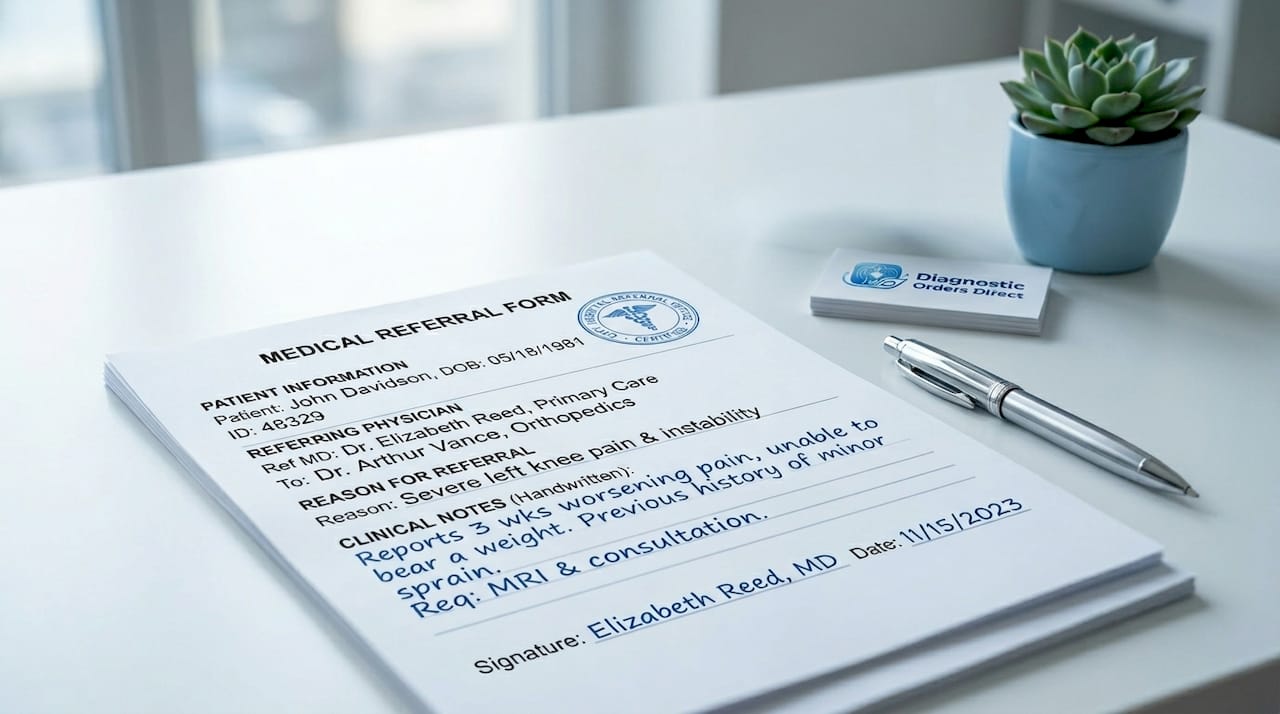
Most diagnostic imaging centers require a clinical referral from a licensed provider before they will confirm any appointment. That referral must include your symptoms, the body area to be scanned, and the specific clinical question the scan is meant to answer. A note that simply says "MRI needed" is rarely sufficient. The referral must be specific enough for the radiologist to understand what they are looking for and why.
There is also an important distinction between diagnostic imaging and commercial elective imaging. Diagnostic imaging is ordered to answer a clinical question, such as ruling out a torn ligament or identifying the source of chronic pain. Commercial elective imaging, such as a full-body wellness scan with no symptoms, operates under different rules and often cannot be billed to insurance. Confusing the two is one of the most common booking errors patients make.
The American College of Radiology recommends against imaging in low-risk cases where the scan would not change clinical management. This means not every scan request gets approved. Your referral must demonstrate that the imaging provides actionable clinical benefit.
Documents to collect before booking
- A signed requisition or referral letter from a licensed provider
- Your insurance card and member ID (if using coverage)
- A list of current medications and known allergies
- Prior imaging reports if the new scan is a follow-up
- Photo ID for identity verification at the facility
Once you submit your referral through an online portal or by fax, expect a 1 to 3 business day verification period before the center confirms your slot. Plan around this window. Do not assume same-day confirmation.
Pro Tip: If you do not have a primary care doctor, services like Diagnosticordersdirect provide licensed provider consultations for $40, giving you a valid imaging order without a traditional referral pathway. Learn more about imaging without a primary care doctor.
Public vs. private imaging centers: how do they compare?
Choosing between a public hospital imaging department and a private imaging center directly affects your wait time, out-of-pocket cost, and overall experience.
Wait times
Public healthcare elective scans can take weeks to several months for non-urgent cases. Urgent cases are prioritized, which pushes elective appointments further back. Private centers typically schedule within 1 day to 2 weeks. That gap is significant if you are waiting on imaging before a specialist visit or treatment decision.
| Factor | Public imaging center | Private imaging center |
|---|---|---|
| Wait time | Weeks to months | 1 day to 2 weeks |
| Cost | Covered by insurance or public plan | Out-of-pocket or partial insurance |
| Booking method | Referral through hospital system | Direct booking, online or phone |
| Quality rating | Varies by facility | CMS Five-Star ratings available |
| Flexibility | Limited scheduling windows | Evening and weekend slots common |
Cost and quality factors
Cost variations of over $25 exist between facilities for the same scan type, and higher CMS star ratings correlate with better patient satisfaction and service quality. That means price alone should not drive your decision. A lower-cost facility with poor preparation support or long turnaround times for results can cost you more in rescheduling and delays.
When comparing centers, check these factors:
- Distance and parking or transit access
- Whether the facility accepts your insurance plan
- Turnaround time for radiology reports
- Availability of online patient portals for results
- Preparation support, including written instructions sent in advance
Pro Tip: Call the imaging center directly and ask for their average wait time for your specific scan type. Most centers will tell you. This one question can save you two to three weeks.
How to schedule your elective imaging appointment step by step
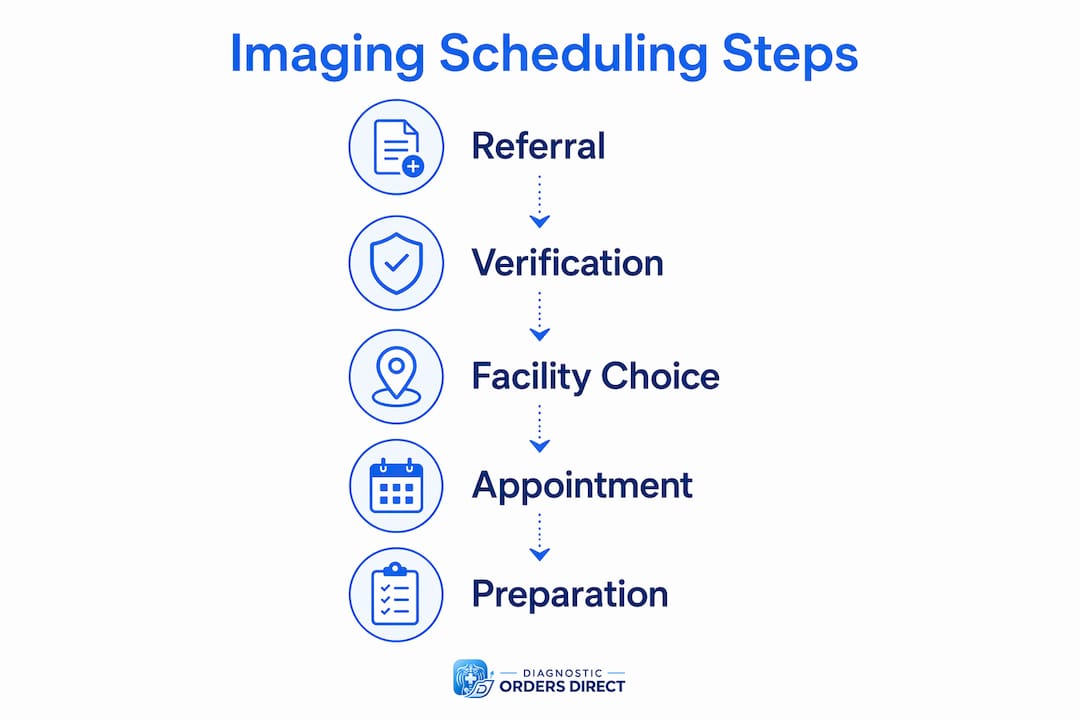
Planning elective imaging correctly means following a defined sequence. Skipping steps causes delays.
-
Confirm your referral is complete. Verify that your requisition includes the scan type, body area, clinical indication, and provider signature. An incomplete referral is the leading cause of booking rejection.
-
Identify two or three candidate facilities. Use your insurance provider's directory, or search for centers with CMS Five-Star ratings. For lower-cost imaging options, compare self-pay rates directly with facilities.
-
Use the online booking portal or call directly. Most private centers now offer online scheduling. Select your preferred location, date, and time. Upload your referral document during this step if the portal requires it.
-
Submit your requisition for review. Online portals allow requisition uploads for evaluation before booking is finalized. After submission, the center reviews your referral for clinical appropriateness. This takes 1 to 3 business days.
-
Receive confirmation and preparation instructions. Once approved, you receive a confirmation with your appointment date and time. Preparation instructions arrive with this confirmation or separately. Read them immediately.
-
Follow preparation protocols exactly. Preparation requirements vary significantly by scan type. Some ultrasounds require increased fluid intake in the days prior. MRI scans require metal removal and may require fasting. CT scans with contrast require kidney function checks beforehand. Missing any of these steps results in a canceled appointment.
| Scan type | Common preparation requirement | Lead time needed |
|---|---|---|
| MRI | Remove metal, possible fasting | 24 hours |
| CT with contrast | Kidney function check, fasting | 24 to 48 hours |
| Ultrasound (abdominal) | Full bladder or fasting | Same day |
| PET-CT | Fasting, low-carb diet prior | 24 to 48 hours |
| X-ray | Minimal preparation | Same day |
Pro Tip: If you need multiple scans, ask the scheduling coordinator whether they can be combined in one visit. Many centers can sequence an MRI and an X-ray on the same day, reducing your total time off work and travel.
Common mistakes that delay or cancel elective imaging appointments
Most scheduling failures are preventable. These are the errors that cause the most disruption.
-
Submitting an incomplete referral. A referral without a specific clinical question or body area will be rejected. The center cannot proceed without this information.
-
Confusing diagnostic imaging with commercial elective imaging. This terminology confusion leads to booking errors and insurance claim denials. If your scan is ordered to investigate symptoms, it is diagnostic. If it is a wellness scan with no clinical indication, it is commercial elective. The documentation and billing pathways differ.
-
Ignoring preparation instructions. Failure to follow preparation protocols is one of the most common reasons appointments are canceled on the day of the scan. Read the instructions the moment you receive them, not the morning of your appointment.
-
Not verifying insurance authorization in advance. Some insurers require pre-authorization for MRI and CT scans. Calling your insurer before booking confirms whether authorization is needed and prevents a surprise denial.
-
Waiting for the center to contact you. After submitting your referral, follow up if you have not received confirmation within 3 business days. Systems get backed up. A single follow-up call keeps your booking on track.
"Elective does not mean optional. Scan appropriateness is required to confirm clinical value and avoid unnecessary costs." — Radiology Authority
Communicate clearly with both your referring provider and the imaging center. If your symptoms change between booking and your appointment, notify both parties. Updated clinical information may affect which scan type is most appropriate.
Key takeaways
Successful elective imaging scheduling depends on having a complete referral, choosing the right facility, and following preparation instructions without exception.
| Point | Details |
|---|---|
| Referral is mandatory | A signed clinical referral with symptoms and scan type is required before any center confirms your appointment. |
| Wait times differ significantly | Private centers schedule within 1 to 2 weeks; public systems can take months for non-urgent scans. |
| Verification takes 1 to 3 days | Submit your requisition early and plan around the review window before expecting confirmation. |
| Preparation varies by scan | Read preparation instructions immediately after receiving them to avoid same-day cancellations. |
| Terminology matters | Diagnostic imaging and commercial elective imaging follow different rules; confusing them causes denials. |
What I've learned about elective imaging scheduling after years of watching patients struggle
The biggest frustration I see is patients who do everything right clinically but get stuck in administrative loops. They have symptoms. They have a provider willing to refer them. But they spend weeks going back and forth between offices, insurers, and imaging centers because no one explained the process clearly upfront.
Digital scheduling tools are genuinely improving this. Reinforcement learning-based scheduling has achieved up to a 44.8% reduction in average wait times at high-complexity hospitals. That is not a marginal improvement. It changes the patient experience entirely. But technology only helps if patients know how to use the system correctly on their end.
The part that still concerns me is the clinical oversight gap. Digital scheduling reduces administrative barriers, but clinical review remains non-negotiable. Patients who bypass the referral process entirely, or who book commercial wellness scans thinking they are getting diagnostic imaging, often end up with results that no radiologist has been asked to interpret in a clinical context. That is a real problem.
My advice: be a proactive patient, not a passive one. Know what scan you need, why you need it, and what your referral says. Ask questions at every step. The patients who get through the system fastest are the ones who treat scheduling as a process to manage, not a waiting game to endure. Use self-pay preventive imaging options when insurance delays are the bottleneck. And never assume your appointment is confirmed until you have written proof.
— Tod
How Diagnosticordersdirect simplifies your imaging order process
Getting a valid imaging order should not require weeks of phone calls or a primary care doctor you do not have. Diagnosticordersdirect provides licensed provider consultations for $40, giving patients a clinical referral for MRI, CT scans, and other diagnostic imaging without the traditional referral pathway. There is no insurance required, and pricing is transparent upfront. Once your consultation is complete, you receive a signed order you can take directly to any imaging center. For patients who need imaging before a specialist appointment or who are navigating insurance delays, this is a direct path to getting your scan scheduled without the wait. Visit Diagnosticordersdirect to start your consultation today.
FAQ
What is elective diagnostic imaging?
Elective diagnostic imaging refers to non-urgent medical scans, such as MRI or CT, ordered to investigate symptoms or monitor a condition when immediate treatment is not required. The scan is clinically indicated but can be scheduled at a convenient time rather than on an emergency basis.
How long does it take to schedule an elective imaging appointment?
Wait times range from 1 day to several months depending on whether you use a private or public facility. Private centers typically offer appointments within 1 to 2 weeks, while public hospital systems may have longer queues for non-urgent cases.
Do I need a referral for elective diagnostic imaging?
Yes. Most imaging centers require a signed clinical referral from a licensed provider before confirming any appointment. The referral must specify the scan type, body area, and clinical reason for the imaging.
What happens if I skip the preparation instructions?
Skipping preparation steps, such as fasting before a CT with contrast or maintaining a full bladder for an abdominal ultrasound, typically results in a canceled appointment on the day of the scan. You will need to rebook and wait again.
Can I get an imaging order without a primary care doctor?
Yes. Services like Diagnosticordersdirect connect patients with licensed providers who can issue valid imaging orders for a flat $40 consultation fee, with no insurance or primary care relationship required.