
Elective diagnostic imaging is defined as medical scanning performed without an urgent clinical indication, chosen by patients or providers to gather health information beyond what an emergency or acute visit requires. The main types of elective diagnostic imaging scans include MRI, CT, X-ray, ultrasound, nuclear medicine, and PET scans. Each serves a distinct purpose, carries different risks, and comes with its own cost profile. Understanding these differences helps you ask better questions, avoid unnecessary procedures, and get the scan that actually answers your health concern.
1. What are the main types of elective diagnostic imaging scans?
Elective imaging procedures fall into five primary categories, each using different technology to produce images of the body's internal structures. The right choice depends on what tissue or organ you need to examine, how much radiation exposure is acceptable, and what your budget allows.
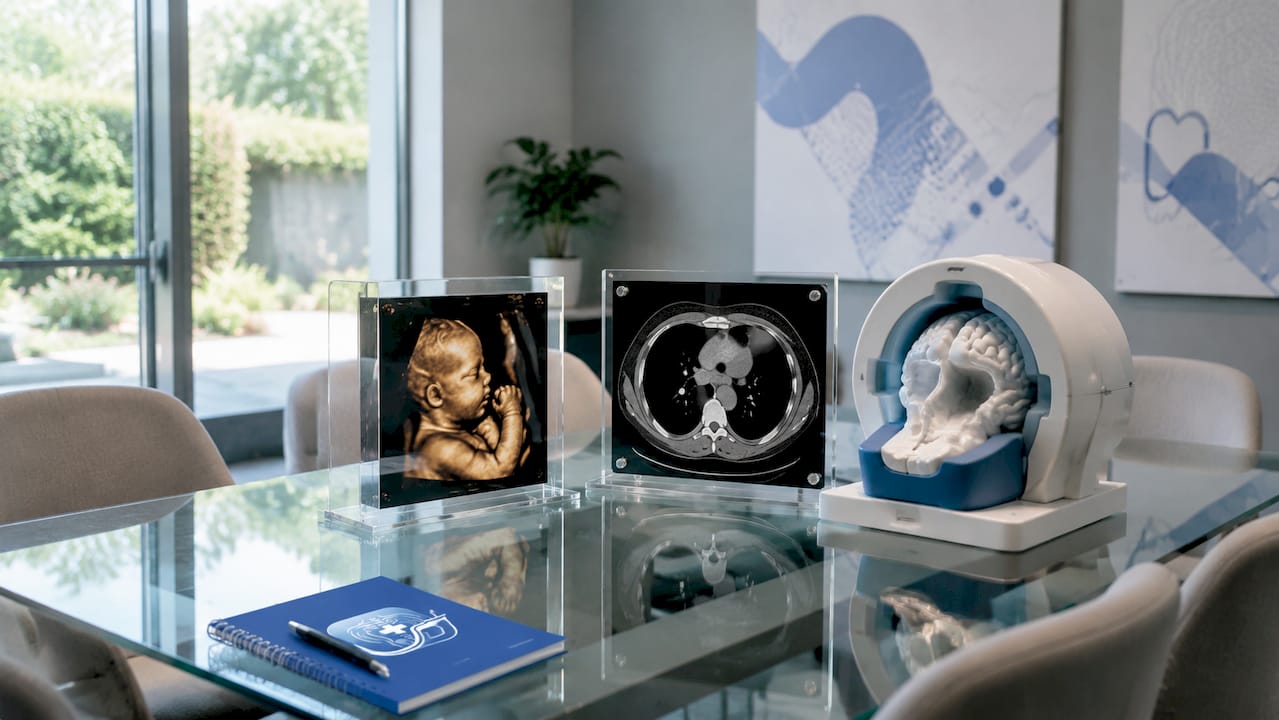
Magnetic resonance imaging (MRI)
MRI provides superior soft tissue contrast without using ionizing radiation, making it the preferred elective scan for the brain, spine, joints, and soft tissue masses. This matters because patients who want repeat imaging over time avoid cumulative radiation exposure entirely. Scan times typically run 30 to 60 minutes, and the machine produces loud knocking sounds. Patients with metal implants, pacemakers, or severe claustrophobia need to discuss alternatives with their provider before booking.
Pro Tip: If you are considering a whole body MRI for general health screening, confirm in advance which body regions are included and what the radiologist's reporting protocol covers for incidental findings.
Computed tomography (CT)
CT scans deliver fast cross-sectional images using ionizing radiation at a moderate dose, making them the go-to elective choice for chest, abdomen, pelvis, and vascular structures. A full chest CT takes under 10 minutes, which is a practical advantage for patients with limited time or difficulty holding still. The trade-off is radiation exposure, which accumulates with repeated scans. Elective CT use is most justified when the clinical question cannot be answered by ultrasound or MRI.
X-ray
X-ray is the most widely available and lowest-cost elective radiology test, used primarily for bones, lungs, and dental structures. It uses ionizing radiation at a lower dose than CT. For patients monitoring a known bone condition or checking for lung changes, X-ray offers a fast, affordable baseline. Image detail for soft tissue is limited, so X-ray works best when the target structure is dense, such as bone or calcified tissue.
Ultrasound
Ultrasound produces real-time images without radiation, making it a strong elective option for abdominal organs, thyroid, pelvic structures, and vascular flow. The limitation is that image quality depends heavily on the sonographer's skill and the patient's body composition. Ultrasound is often the first elective scan ordered for abdominal discomfort or thyroid nodules because it is fast, low-cost, and carries no radiation risk.
Nuclear medicine and PET scans
Nuclear medicine and PET (positron emission tomography) scans use radiotracers injected into the body to produce functional images showing how organs and tissues are working, not just what they look like. PET scans are used electively to assess metabolic activity in cancer surveillance, neurological conditions, and cardiac function. These scans take longer to complete, require radiotracer preparation time, and cost significantly more than standard MRI or CT. The educational resources on PET-CT from Diagnosticordersdirect explain the preparation and reporting process in plain language.
2. How elective imaging procedures compare in risks, costs, and benefits
Choosing between elective imaging options requires a clear look at radiation exposure, cost, scan duration, and what each modality can and cannot detect.
| Scan Type | Radiation Exposure | Typical Self-Pay Cost | Scan Duration | Best Elective Use |
|---|---|---|---|---|
| MRI | None | $400–$2,500 | 30–60 min | Brain, spine, joints, soft tissue |
| CT | Moderate | $250–$1,500 | 5–15 min | Chest, abdomen, vascular |
| X-ray | Low | $50–$250 | Under 5 min | Bones, lungs |
| Ultrasound | None | $100–$500 | 15–45 min | Abdomen, thyroid, pelvis |
| PET/Nuclear | Moderate to high | $1,500–$5,000 | 1–3 hours | Cancer surveillance, cardiac, neuro |
One risk that applies across all types of elective diagnostic imaging scans is the discovery of incidental findings. Elective scans frequently uncover incidentalomas, which are unexpected findings unrelated to the original reason for scanning. These findings can trigger additional testing, specialist referrals, and significant patient anxiety, even when the original finding turns out to be benign. This is not a reason to avoid elective imaging, but it is a reason to discuss the possibility with your provider before the scan.
Insurance coding also affects your out-of-pocket cost in ways most patients do not anticipate. Screening and diagnostic imaging use different CPT codes, and the diagnostic code assigned to your scan determines whether your deductible and copay apply. A screening mammogram coded under CPT 77067 may be fully covered, while the same physical exam coded as diagnostic triggers cost-sharing. Confirm the CPT and diagnosis codes your provider plans to use before your appointment.
Key cost and risk considerations for elective imaging:
- MRI and CT scans usually require prior authorization from insurers; X-rays and ultrasounds generally do not.
- Self-pay pricing at independent imaging centers is often 40 to 70 percent lower than hospital-based pricing for the same scan.
- PET scans carry the highest radiation dose among common elective options and should be reserved for situations with clear clinical justification.
- Incidental findings are more common with whole-body and advanced MRI protocols than with targeted, single-region scans.
3. What qualifies as elective diagnostic imaging and how appropriateness is determined
The American College of Radiology (ACR) publishes appropriateness criteria that rate imaging orders on a scale of 1 to 9. Scores below 4 are considered low-benefit and are generally not recommended. This scoring system is the primary tool radiologists and ordering providers use to determine whether a scan is justified for a given clinical scenario. A score of 7 to 9 indicates the scan is appropriate; a score of 1 to 3 means the imaging is unlikely to change patient management.
Referral quality compounds this problem. Between 53 and 68 percent of imaging orders are classified as Grade D requests, meaning they lack sufficient clinical information to justify the scan. Only 1 to 4 percent of orders reach Grade A quality. This means most imaging orders are written with incomplete justification, which makes it harder for radiologists to tailor their reports and for patients to understand what the scan is actually looking for.
The Choosing Wisely initiative, a campaign supported by more than 80 medical specialty societies, advises against routine imaging for low-risk conditions. Specific examples include avoiding routine chest X-rays before low-risk surgery and skipping annual imaging for stable, uncomplicated conditions. The goal is to reduce radiation exposure and unnecessary costs without reducing diagnostic accuracy.
Radiology experts state that the benefits of imaging must outweigh the risks, including radiation exposure and incidental findings. Elective scans that lack a clear diagnostic aim are actively discouraged by professional guidelines.
Practical steps to assess whether an elective scan is appropriate:
- Ask your provider what specific clinical question the scan is intended to answer.
- Request the ACR appropriateness score or category for your specific scan and indication.
- Check whether the Choosing Wisely database lists your proposed scan as low-value for your condition.
- If your provider cannot explain the diagnostic aim clearly, consider a second provider review before proceeding.
Pro Tip: Patients who arrive at imaging appointments with a written summary of their symptoms, relevant history, and prior test results give radiologists the context needed to produce more accurate, targeted reports.
4. How to order elective imaging scans and manage costs
Ordering elective imaging without a primary care doctor is possible in most U.S. states, either through direct-access imaging centers or through licensed provider consultation services. The process differs from standard referral-based imaging in one key way: you take responsibility for understanding the scan's purpose and cost before the appointment.
Steps for managing the ordering and cost process:
- Confirm whether your state allows direct-access imaging or requires a provider order.
- Contact your insurer to verify whether the scan requires prior authorization. MRI and CT scans typically require authorization, while X-rays and ultrasounds usually do not.
- Ask the imaging center for the CPT code and confirm whether your insurer will apply it as screening or diagnostic. Confirming CPT and diagnosis codes before your scan prevents unexpected bills.
- Compare self-pay rates at independent imaging centers versus hospital outpatient departments. The price difference for the same MRI can exceed $1,000.
- If you are uninsured or underinsured, explore self-pay preventive imaging options that offer transparent flat-rate pricing.
Timing also affects cost. Scheduling elective scans after meeting your annual deductible reduces out-of-pocket expense if you have insurance. For self-pay patients, booking during weekday off-peak hours at independent centers often yields lower rates than weekend or evening slots.
Pro Tip: Patients seeking imaging before a specialist appointment can use services like Diagnosticordersdirect to obtain a provider order quickly, so the specialist receives your scan results at the first visit rather than ordering imaging as a separate step.
Key takeaways
Elective diagnostic imaging scans require matching the right modality to the right clinical question, with clear justification, cost awareness, and an understanding of incidental finding risks.
| Point | Details |
|---|---|
| Match modality to question | MRI suits soft tissue; CT suits cross-sectional views; ultrasound suits real-time organ assessment. |
| Check appropriateness first | ACR criteria scores below 4 indicate the scan is unlikely to improve patient management. |
| Confirm CPT codes before scanning | Screening versus diagnostic coding changes your out-of-pocket cost significantly. |
| Prior authorization varies by scan type | MRI and CT usually require insurer approval; X-rays and ultrasounds generally do not. |
| Incidental findings are a real risk | Elective scans can uncover unexpected findings that trigger further testing and anxiety. |
My take on elective imaging: what the guidelines miss
I have spent years reviewing how patients approach elective imaging decisions, and the pattern is consistent. Most people focus entirely on whether they can get the scan, not whether the scan will actually answer their question. That is the wrong starting point.
The ACR appropriateness criteria exist for a reason. When a scan scores below 4 on the 1 to 9 scale, it is not bureaucratic gatekeeping. It reflects genuine evidence that the imaging is unlikely to change what happens next in your care. Ordering a scan that produces no actionable result wastes money and, in the case of CT or PET, adds radiation exposure with no benefit.
The rise of boutique and direct-access imaging centers has made elective scans easier to obtain, which is genuinely useful for patients without primary care doctors or those facing long referral waits. But easier access does not equal better outcomes. A whole-body MRI ordered without a clear clinical framework produces a report full of findings that no one has a plan to address. That is not early detection. That is uncertainty creation.
The patients who benefit most from elective imaging are those who arrive with a specific question, a relevant symptom history, and a provider who can interpret the results in context. If you are considering preventive imaging based on family history, that is a legitimate and often underused application. If you are ordering a scan because you are generally anxious about your health, the scan is unlikely to resolve that anxiety and may intensify it.
Get the scan that answers a question. Make sure someone is ready to act on the answer.
— Tod
Get your imaging order without the wait
Diagnosticordersdirect provides licensed provider consultations for $40, giving patients access to MRI, CT, and other imaging orders without a primary care referral. The platform is built for patients who need timely access to elective radiology tests, whether they are uninsured, between doctors, or facing delays in the traditional referral process.
Patients can submit their symptoms and medical history online, receive a provider review, and obtain a signed imaging order, often the same day. Diagnosticordersdirect supports orders for CT scans, MRI, and a range of other diagnostic imaging options with transparent, flat-rate pricing. For patients without a primary care doctor, the platform offers a direct path to imaging order consultations that bypass the standard referral bottleneck. Visit Diagnosticordersdirect to review available scan types and start your consultation.
FAQ
What is elective diagnostic imaging defined as?
Elective diagnostic imaging is scanning performed without an urgent clinical indication, chosen to gather health information when no emergency exists. The American College of Radiology defines low-benefit imaging as scans with appropriateness scores below 4 on a 1 to 9 scale.
Does insurance cover elective imaging scans?
Coverage depends on how the scan is coded. Diagnostic imaging codes typically trigger deductibles and copays, while screening codes may be fully covered. Confirm the CPT and diagnosis codes with your provider before scheduling.
Do elective MRI or CT scans require prior authorization?
MRI and CT scans usually require prior authorization from insurers, while routine X-rays and ultrasounds generally do not. Check with your insurer before booking to avoid claim denials.
Can you get an elective imaging order without a primary care doctor?
Yes. Services like Diagnosticordersdirect provide licensed provider consultations that result in signed imaging orders, allowing patients to access elective scans without a primary care referral.
What are the risks of elective diagnostic scans?
The primary risks are radiation exposure from CT and PET scans, and the discovery of incidental findings across all scan types. Incidental findings can lead to additional testing and patient anxiety, even when the original finding is benign.